
Blogbeitrag
What to Know About the 25th Amendment
You’ve probably been hearing talk about the 25th Amendment. Here’s what you need to know about it — and why Common Cause is calling for it to be used immediately.
Artikel
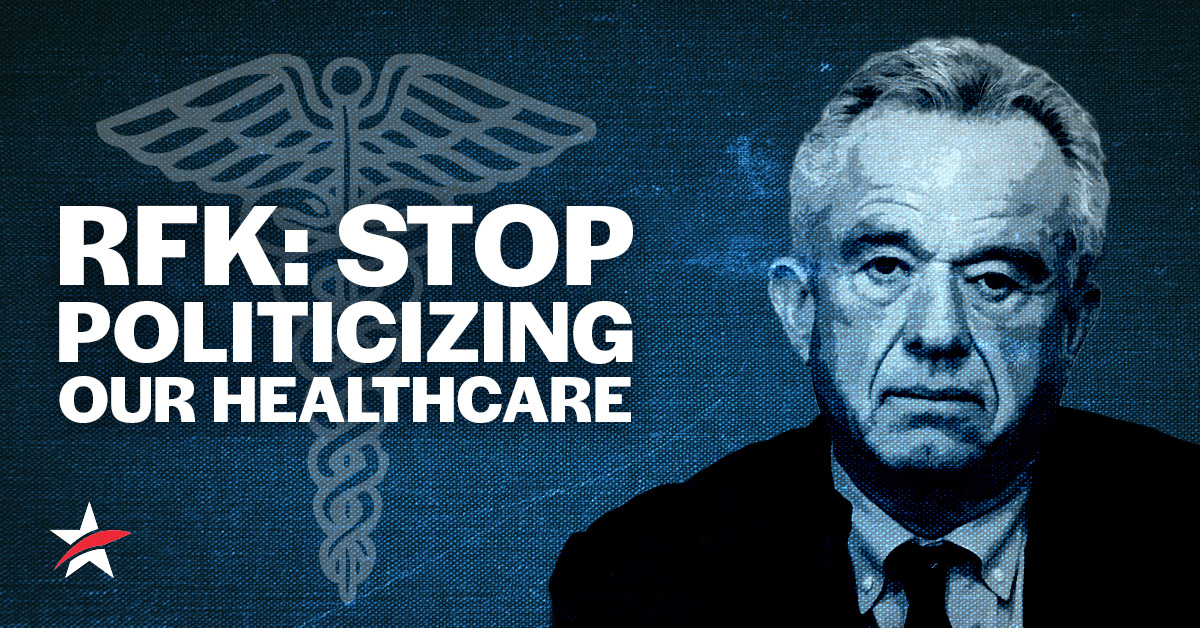
Health and Human Services Secretary Robert F. Kennedy, Jr. has gotten plenty of attention this year with his “Make America Healthy Again” (MAHA) agenda.
And understandably so – many people across the political spectrum are frustrated with corporate control of our food and health systems and want the government to put people before profit.
Kennedy tries to present himself as a champion against corporate power. But his record tells a different story.
Instead of challenging powerful industries, Kennedy has advanced policies that benefit big corporations, weakened oversight, and put public health at risk. Here are five ways Kennedy’s HHS is helping corporate interests, not the American people.
In May, Kennedy committed HHS to adopt a “10-to-1” deregulatory policy: for every one new rule, 10 existing rules would be eliminated. He even invited corporations to suggest which regulations they wanted to scrap.
Food and drug regulations exist to protect people’s health and safety. Letting corporations decide which rules are “burdensome” is a recipe for weaker protections Und stronger corporate influence.
Under Kennedy and FDA Commissioner Marty Makary, the agency created a new “Commissioner’s National Priority Voucher.” These vouchers let certain companies move their products more quickly through the FDA review process if they are said to “enhance the health interests of Americans.”
The problem is twofold. First, Kennedy’s own track record shows questionable judgment about what counts as “healthy” – he has rejected proven measures like vaccines. Second, with FDA staff cuts, the agency is less equipped to independently evaluate products. That means that the FDA will increasingly have to take corporations at their word that their products are safe and effective.
Kennedy’s FDA also launched a nationwide “listening tour,” open only to pharmaceutical and biotech CEOs who already have products under review.
Instead of hearing from patients, doctors, or everyday people, the FDA is choosing to prioritize giving private access to corporate executives. This kind of closed-door approach undermines transparency and tilts the balance of power toward industry interests.
A leaked MAHA report showed Kennedy’s FDA plans to eliminate many food safety regulations and rely more heavily on voluntary industry action. That means companies would be expected to police themselves on issues like safety standards and best practices.
Public health experts warn this is a dangerous path. Aviva Musicus, Science Director at the Center for Science in the Public Interest, said the plan is “poised to make America sicker, hungrier, Und more at risk from unsafe food.” Rather than standing up to corporate power, Kennedy is giving companies more freedom to cut corners.
Kennedy’s personal financial interests also raise red flags. Since 2022, he has earned around $2.5 million in referral fees from Wisner Baum, a law firm suing Merck, the maker of the HPV vaccine Gardasil.
The HPV vaccine is backed by the CDC, WHO, and other major health organizations as safe and effective at preventing cancer. Kennedy’s involvement with lawsuits against it shows a clear conflict of interest. Instead of putting science and public health first, he has profited from and built his career on promoting vaccine skepticism.
Kennedy brands himself as an anti-corporate crusader, but his actions at HHS show otherwise. From fast-tracking corporate products to weakening food safety rules, he is opening the door wider for corporate power. His personal financial ties and long history of pushing anti-science views make it even harder to trust that his decisions are in the public interest.
At the end of the day, Kennedy’s agenda does nicht put people before profit. It risks making our health system even more vulnerable to corporate capture.

Petition
Stop putting politics over science, forcing out experts, and turning the Department of Health and Human Services into a front for your extreme and untested agenda.
Blogbeitrag
Blogbeitrag
Blogbeitrag