Kỹ năng hiểu biết về phương tiện truyền thông: Tìm kiếm theo chiều ngang
"Tôi phải làm gì nếu người thân của tôi không tin tưởng vào các nguồn thông tin đã được xác minh?" là câu hỏi được #1 hỏi nhiều nhất trong số những người dùng đáng tin cậy khi thảo luận về kiến thức truyền thông.
Đọc ngang hoặc tìm kiếm ngang là một chiến lược giúp chúng ta tự xác định nguồn thông tin nào là đáng tin cậy.
Let’s face it, it’s not easy separating fact from fiction on the internet no matter how intelligent we may be. So, what can we do to discern the credibility of what we’re reading? One fact checker strategy is called lateral searching.
Lateral searching simply means looking at sources of information side by side or, rather, tab by tab. Instead of going deep down the rabbit hole that algorithms so easily lead us, we do a broad search.
“Lateral reading helps you determine an author’s credibility, intent and biases by searching for articles on the same topic by other writers (to see how they are covering it) and for other articles by the author you’re checking on. That’s what professional fact-checkers do.” From the News Literacy Project, Expand your view with lateral reading.
Important Questions to ask while determining whether to trust a source of information.
Who is behind this information?
Is this account Authentic?
Do I trust this person’s intentions?
Is this source qualified to discuss this topic?
The most important question you can ask is, “Who is behind this information?” And then search on the person or more likely, group, who wrote it on Wikipedia. A website may have an “About Us” section that tells you who wrote it or look for the author’s byline.
Another useful site is Media Bias/Fact Check. They rate bias and factual or not so factual reporting. Also, if a group or person is notorious for false and misleading claims, a simple google search will pull up all sorts of articles with examples that can give you more than enough information to know they can’t be trusted.
If you are trying to share verified information with a loved one and they do not trust your source of information, that is OK!The reality is that Bad Actors have done a good job turning Americans away from verified information and towards trusting lies and propaganda. We can overcome this fact by supporting your loved one while they try lateral searching.
Best practices for practicing lateral searching with a loved one.
Do not tell your loved one what to do or think– Ask for permission to guide your loved one as they practice deciding for themselves what is a trustworthy source.
Let your loved one take lead– Developing lateral reading skills takes practice. If possible, have your loved one type and search while you offer verbal support.
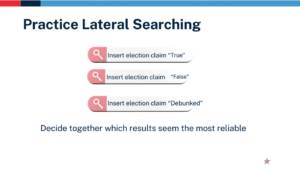
Do broad searching- Open up 3 taps on your search engine. Copy paste the same claim in all 3 search bars. Decide together which results seem the most trustworthy.
in tab 1 add “true” to the end of the claim
in tab 2 add “false” to the end of the claim
in tab 3 add “debunked” to the end of the claim
Be as patient and supportive as possible- Media literacy skills are not developed overnight. Your loved one may still consume media from untrustworthy sources after you practice lateral searching together. It is important to remember that Bad Actors spend and make millions off of using tricky manipulation tactics. The goal is to empower your loved one with the skills they need to be informed participants in a modern society.
Pete Hegseth vs. Anthropic: Read Our Letter On AI Surveillance
The Constitution doesn’t bend just because technology evolves. AI makes it easier than ever for the government to surveil Americans and automate the use of force. That’s why Congress must step in to ensure these tools are used lawfully and that this administration commits to respecting our constitutional rights.
California Thư
Our Response to OpenAI’s Proposed Ballot Measure
CITED, our AI Watchdog group, is sounding the alarm on OpenAI’s proposed ballot measure and the risks it poses to children’s safety.
TAKE THE QUIZ: Is Your Vote Safe?
The reality is, every American would face new barriers to the ballot box if the “SAVE” Act passes.
Texas
Texas’s Redistricting Plan Fails To Meet Common Cause’s Fairness Criteria
Donald Trump is trying to silence YOU in the 2026 midterms
This time, he’s trying to create his own list of who can and can’t vote by mail – and threatening to prosecute local officials if they don’t obey him.
Our response to this blatant attempt to intimidate voters? Mobilizing across the country to show We The People should decide our country’s future, not wannabe dictators.
Will you chip in to support our work to stop Trump’s hostile takeover?