
Recap
Common Cause Wrapped 2025
The Top Common Cause Led Victories of the Year
Michigan Blog Post
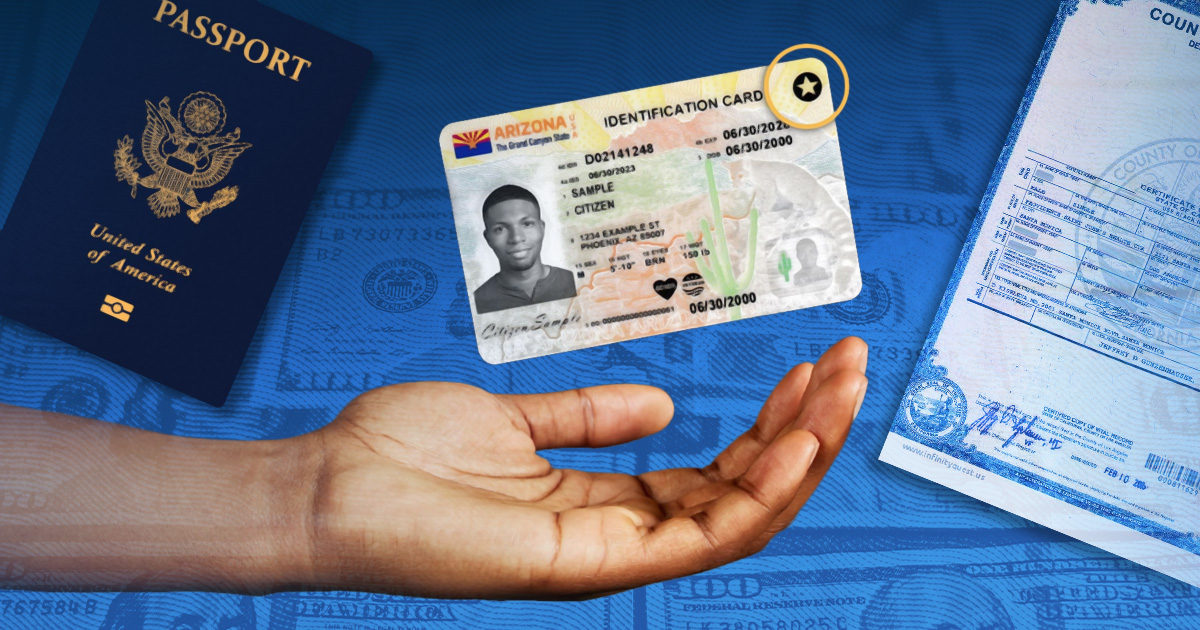
In Michigan and across the country, millions of Americans are bracing for the possibility of losing one of our most fundamental rights in a democracy: the right to vote. Many have heard of the Safeguard American Voter Eligibility (SAVE) Act, a proposed bill that passed in the House, would require all voters to present in-person documentation of U.S. citizenship – namely, a birth certificate or passport – before registering to vote. But that is just one of many proof of citizenship efforts, including potential constitutional amendment changes that specifically target Michiganders.
For many Americans, especially those who are women, disabled, elderly, low-income, rural, or part of communities that have long faced systemic barriers to civic participation, the consequences of this law being passed would be devastating.
In interviews with voters, a common theme emerged: this legislation isn’t about security – it’s about exclusion. For some, their name no longer matches their birth certificate. For others, visiting a clerk’s office is physically impossible. These real-life stories reveal how the documentary proof of citizenship efforts would disenfranchise people who have spent their lives participating in and believing in the promise of American democracy. These aren’t just statistics or hypotheticals. These are your neighbors, your veterans, your community elders – people whose right to vote could vanish with the stroke of a pen.
Betty has been casting her ballot since she turned 18. A mother of three and a Michigan resident, she’s faced down more than her fair share of obstacles—blood clots that damaged her lungs, debilitating osteoarthritis, and lymphedema that now requires her to use a walker and be on permanent oxygen. But she’s never let any of that keep her from participating in democracy.
That’s why the proposed restrictions hit her so hard.
“Voting by mail is my sole option,” she says. “[If] these unreasonable restrictions [are put] in place, participating in the election will be unattainable.”
Because Betty took her spouse’s surname, her current legal name no longer matches her birth certificate—a discrepancy that could block her from registering or casting a ballot. These potential laws would also require her to show up in person at the county clerk’s office, despite the fact that she can’t drive and relies on medical transportation services, which won’t take her to government buildings for non-medical reasons.
“I understand the motivations behind this law,” she says, “and I am concerned that he might succeed.”
Betty isn’t alone in her fear. Her daughter, who also lives with health issues, is terrified of losing access to mail-in voting.
“We’ve both shed tears over it,” Betty says. “It’s not just us. My elderly neighbor is 86. Her husband is 88. They rely on voting by mail, and he doesn’t even know where his birth certificate is. This situation is deeply troubling and sad, especially with all the hatred surrounding the justifications for the change.”
She sees this moment not just as a personal struggle, but a broader injustice. “Being African American, voting is so important because so many people fought for me to have this opportunity,” she says. “I never thought my great-great grandmother’s struggle would become my experience. But it is.”
She has a message for her elected officials: “I voted for you because I believed you would advocate for my community. But I was mistaken. Where is your determination? We draw our energy from your actions. If they succeed in suppressing votes, it will signal the end of America as we know it.”
Gwen has voted in every election since she was 18, across three different states, without ever facing an obstacle. But she’s the first to acknowledge that her smooth experience may not be universal.
“This may be due to white privilege,” she says. “I cannot know what would have been different if I were a woman of color.”
She first learned about the SAVE Act last year, when details of Project 2025 started reaching the public. She was angry.
“Historically, as our republic matures, we expand access to voting,” Gwen says. “This legislation does the opposite.”
Though her access to the ballot isn’t currently at risk, she sees clearly how the bill would devastate others – especially the people she works with every day.
“I work with vulnerable populations,” she explains. “I know people who have lost their identifying documents or who don’t have the means or digital literacy to track down what the government now demands. This would disenfranchise a disproportionate number of economically disadvantaged voters.”
To Gwen, it’s not just a policy issue – it’s a betrayal of American progress on civil rights.
“Women and African Americans have fought hard to be included,” she says. “We deserve to have a say in who governs us. And there’s no credible proof that justifies this legislation.”
For Charles, these changes threaten to double down on a long history of name-based bureaucratic injustice, one rooted in a legacy of systemic racism.
“I’m two generations away from a sharecropper,” he says. “So many of our names are ‘given’ names and those records may very well be a mess.”
Charles has lived that mess firsthand. The military forced his father to change his name, but the birth certificate was never updated. Later, when Charles tried to settle affairs after his father passed, a Social Security rep told him he’d need to change his own name because he was a Jr. Add in a name mix-up on his sister’s birth certificate, and Charles is now caught in a tangle of documents, many of which don’t match up.
“Now I may be forced to deal with three different first names,” he says.
If any of the proposed documentary proof of citizenship efforts become law, these errors could jeopardize his right to vote.
Symonne is an Army veteran who served in Panama, Pakistan, and the first Gulf War. She’s also a voter who sees casting her ballot as both a right and a responsibility.
“I have literally risked my life and sacrificed my health for this nation, and they are attacking my right to have any say whatsoever,” she said.
She knows firsthand how difficult it can be. For 15 years, she lived abroad and effectively couldn’t vote. She regrets it. Now, back in Michigan, she’s watching the proof of citizenship efforts threaten to create more barriers, especially for women, people in rural areas, and anyone with name changes, adoption histories, or incomplete paperwork.
“The system already is predisposed for white, Anglo Saxon Protestant males, and if you are not one of those, there are already enough barriers in your way to ensure that your voice is not heard,” she said. “This is a deliberate act to disenfranchise anyone in financial hardship, which is, frankly, all minorities.”
She is divorced and has changed her name, and is worried because the bill does not say whether her birth, marriage, and divorce certificates would be considered valid proof of citizenship.
“So I am supposed to trust in people who want to remove my rights, because I am a woman, that they will act in good faith and take my documentation?”
She doesn’t buy some lawmakers’ claims that the bill is about securing our elections.
“The whole premise behind this proposed SAVE Act is to ensure the safety, I believe, of our elections, and that is a complete fallacy,” Symonne said. “We already have safe elections. We already have a great deal of local, state and federal laws and regulations and oversight that ensure that the only thing that this act will do is ensure that we lose those rights.”
Symonne sees this as part of a broader, deeply dangerous movement.
“The Heritage Foundation’s plan does not reflect the average American’s values,” she says. “They are trying to erase women like me from history while legislating what I can or cannot do.”
69
https://www.commoncause.org/articles/the-save-act-five-things-to-know/
39.7%
https://www.americanprogress.org/wp-content/uploads/sites/2/2025/01/SAVEact-tables.pdf
Recap
Blog Post
Blog Post