
Article
Provisional Voting’s Power Over the Most Powerful Man in NC Politics
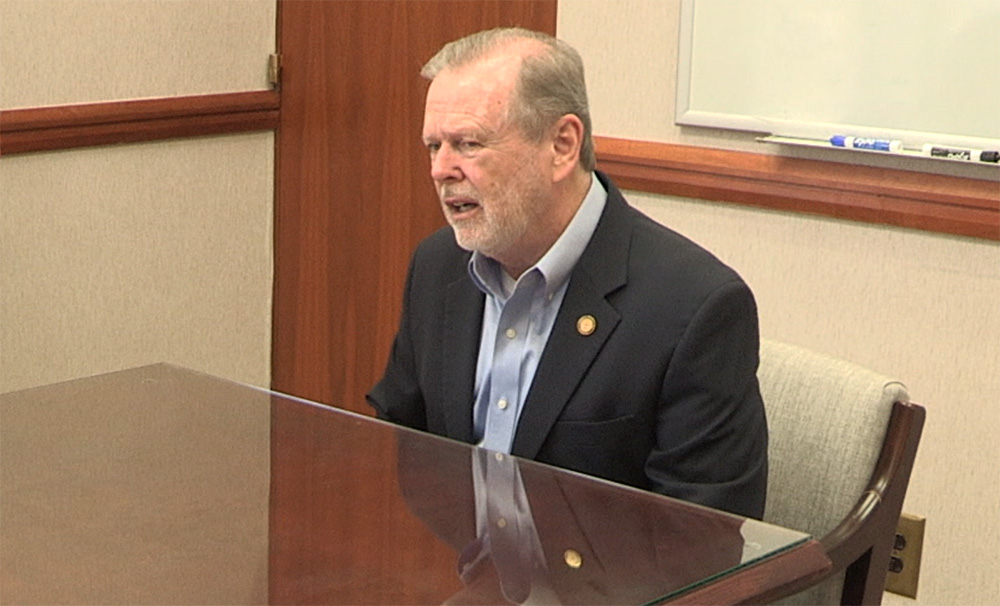
Two years ago, North Carolina Senate Leader Phil Berger called into question counting every vote. He then backed a law that shortened the period of time counties have to count them, including provisional ballots cast by voters with an unresolved problem about their eligibility, such as whether they are voting in the right precinct.
Now facing a two-vote deficit in his Senate re-election bid, it’s these very provisional ballots that could decide whether he remains the most powerful man in state politics.
The 2024 Senate Bill 382 that got Sen. Berger here was controversial from the start.
It started as disaster relief legislation to help victims of Hurricane Helene but quickly turned into a vehicle for Republican leaders to change the way our elections are run.
Among other changes, the new law slashed the provisional ballot counting period from 10 days to just three. (That means the new deadline is this Friday, March 6.)
Cutting a week off the time to research and process thousands of provisional ballots sparked immediate concern among election officials.
In a November 2024 letter to the North Carolina General Assembly, Sara LaVere, the then-president of the NC Association of Directors of Elections (NCADE) told lawmakers, “[t]he timelines and requirements outlined in the legislation do not align with the practical realities of running elections in our state.”
LaVere, who has spent the last 11 years as elections director in fast-growing Brunswick County, went on to say, “Reducing this timeline to three days would overwhelm existing resources, especially in counties with limited staffing.”
At the other end of the state in Buncombe County, one staffer warned that their team might have to add “10-20 additional workers” to analyze provisional votes under the new timeline. Worried about how to pay for the added workers, one county board member said, “This is an unfunded mandate from the General Assembly… and I for one would like to send them the bill.”
But the list of reasons to shelve these drastic election changes ultimately fell on deaf ears.
The legislature overrode the governor’s veto of SB382 on a party-line vote, setting in motion a scenario where the head of the Senate is relying on the very provisional counting process he and every other member of the GOP caucus fought to impede.
Fast forward to 2026, and voters increasingly rely on the provisional process as a safeguard against getting lost in the many election rule changes imposed over the past 15 years. In fact, through no fault of their own, nearly 70,000 voters are now subject to a “registration repair” process that requires they use a provisional ballot.
Fortunately, intrepid election staff in all 100 North Carolina counties are processing provisional ballots and will do what the law requires to ensure every provisional ballot is reviewed. While election results will not be final until they complete their work, election staff should not have to endure the burdensome conditions imposed by SB382 to process ballots that are an invaluable safeguard for many North Carolina voters.
As voting began in 2026, Common Cause North Carolina released research on the power of handfuls of votes to change high-profile elections. The report demonstrates over multiple cycles (as recently as last year) how a single person’s vote — or decision not to vote — has made the difference in who won or lost dozens of North Carolina elections.
In at least one high-profile 2026 primary, provisional voters hold much of that power.
North Carolinians interested in monitoring their county’s provisional vote counting this week and next can learn how at ccnc.me/electionhub.
Sailor Jones is State Director for Common Cause North Carolina.