Letter Campaign
Legislation
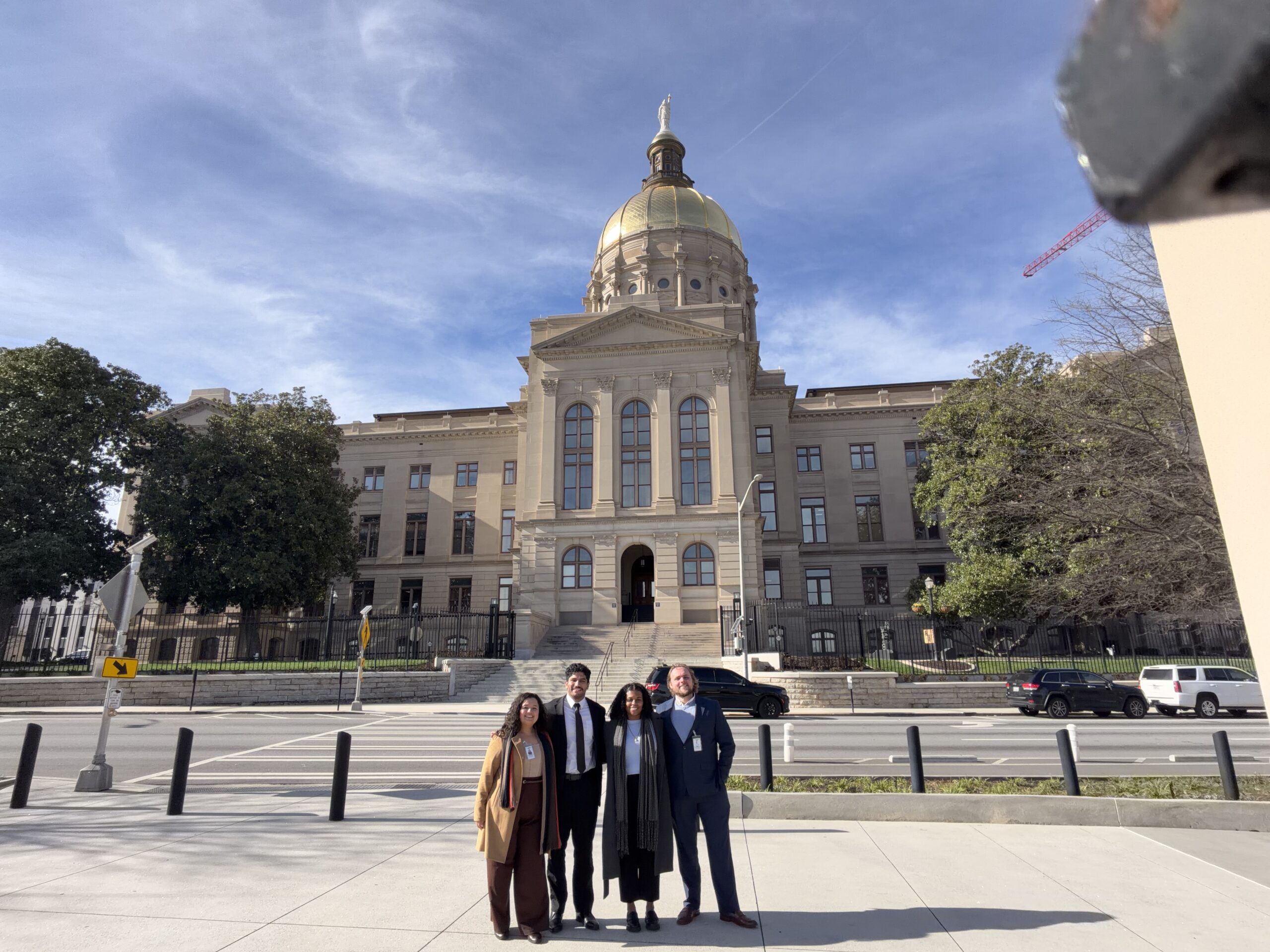
Our Work at the Georgia State Capitol
We believe that a healthy democracy requires more than casting a ballot. That's why we also work to ensure that the rules governing our elections and our government are fair, transparent, and free from undue influence, and that all Georgians, regardless of background, have an equal voice in the decisions that shape their lives.
You can read details about important bills we are tracking this session and find letter and call campaigns we have set up to pressure our state elected officials around certain critical bills.
Letter Campaign
Tell Gwinnett leaders: Do NOT enter into a 287(g) agreement with ICE, Do NOT cooperate with this authoritarian regime
Letter Campaign
Stop SB 116: Tell your State Representative not to expand DNA surveillance in Georgia
Georgia law generally treats traffic offenses in Title 40 as misdemeanors unless otherwise stated, and ICE’s own rules describe detainers as requests to law enforcement agencies.
In Georgia, where local jails already participate in ICE’s 287(g) jail-enforcement model, this bill would deepen the pipeline from low-level criminalization to immigration...
Letter Campaign
Stop HB 963: Don’t take out Georgians from civic life
The bill bans some immigrants from contributing to or “participating” in ballot-measure campaigns under accusations that foreign nationals improperly influence the democratic process. The bill defines “foreign national” broadly, including many lawful residents and some business entities with foreign ownership. It also defines...
Letter Campaign
Reject the DOJ’s Demand for Voter Files
Frequently Asked Questions: Georgia's Legislative Session
What is the Georgia legislative session?
Most people are aware of the impact federal legislation has on our communities, but the policies being set at the state and local level are often less understood yet they have a greater impact on our daily lives. They also present powerful opportunities for us to advocate and create real change for our communities, especially in an environment with an increasingly authoritarian federal government.
The Georgia General Assembly meets every year beginning in January for a 40-day legislative session. During this time, state lawmakers in the House of Representatives and the Senate introduce, debate, and vote on bills that become Georgia state law. The session typically runs through March or April depending on the calendar. In 2026, the session began on January 12, with Crossover day on March 6, and the final day of session (also called Sine Die) scheduled for April 2nd.
How does a bill become a law in Georgia?
A bill is introduced in either the House or Senate, assigned to a committee, and must pass out of committee before receiving a full chamber vote. If it passes, it moves to the other chamber and goes through the same process. Once both chambers pass the same version of the bill, it goes to the Governor to be signed into law, vetoed, or allowed to pass without signature.
The committee point during the process is particularly important as this is where most bills are stopped. This is also the time where the the public can provide public comment on a bill. The majority of our calls to action will be sent during this point in the process. If you are interested in providing public comment on a bill contact Andres Parra at aparra@commoncause.org
What does Common Cause Georgia do during session?
Our policy team is at the State Capitol everyday of session to monitor legislation, track votes, meet with lawmakers, and mobilize Georgians to contact their representatives on issues that affect our democracy. We focus on bills related to voting rights, elections, redistricting, ethics, and civic participation, and we alert our members when it’s time to take action.
How can I follow what's happening during session?
You can track bills on the Georgia General Assembly’s official website at legis.ga.gov. You can also sign up for Common Cause Georgia’s member newsletter for alerts to get updates on the bills we’re watching and opportunities to make your voice heard.
Can I contact my legislator during session?
Absolutely. State and local lawmakers live and work in our state. That means that we have a big opportunity to meet and talk to them during and out of session. Your voice and presence at the Capitol make a real difference. You can call, email, or write to your state Representative or Senator at any point during session. When lawmakers hear directly from constituents, it influences how they vote. Common Cause Georgia makes it easy to take action with our letter campaign tools.
Take Action
Letter Campaign
Stop SB 116: Tell your State Representative not to expand DNA surveillance in Georgia
Georgia law generally treats traffic offenses in Title 40 as misdemeanors unless otherwise stated, and ICE’s own rules describe detainers as requests to law enforcement agencies.
In Georgia, where local jails already participate in ICE’s 287(g) jail-enforcement model, this bill would deepen the pipeline from low-level criminalization to immigration...
Letter Campaign
Stop HB 963: Don’t take out Georgians from civic life
The bill bans some immigrants from contributing to or “participating” in ballot-measure campaigns under accusations that foreign nationals improperly influence the democratic process. The bill defines “foreign national” broadly, including many lawful residents and some business entities with foreign ownership. It also defines...
Your financial support helps us make an impact by holding power accountable and strengthening democracy.
Updates
Article
Post-Crossover Day Legislative Update
Check out this week’s article to read more about Georgia’s legislative landscape and sign up to join us on March 19 for a day of advocacy and community.
Article
This Friday is Crossover Day at the Georgia State Capitol. Here’s What That Means and What’s at Stake
This is one of the most consequential deadlines of the entire legislative session, which is why our team will be at the Capitol to advocate for Georgians and challenge legislation that seeks to undermine our rights and our democracy.
Check out this week’s article to read more about what Crossover Day means and what’s at stake.