

TAKE THE QUIZ: Is Your Vote Safe?
The reality is, every American would face new barriers to the ballot box if the “SAVE” Act passes.
Texas
In Texas, lawmakers have kicked off a mid-decade redistricting fight, pushing new maps through a special legislative session at the request of Donald Trump to add as many as five new Republican seats before the 2026 midterms.
The plan, which passed in August, has drawn national attention — and lawsuits — for its blatant gerrymandering and lack of public input.
Common Cause used its Mid-Decade Redistricting Fairness Criteria to evaluate Texas’s plan. Here’s how it measures up:
Texas started this mid-decade redistricting battle by pushing to aggressively redraw its map to add up to five new Republican seats before the 2026 mid-terms, at Trump’s request.
The Texas plan was introduced quickly, in a special legislative session. While three in-person hearings were scheduled, Texas legislators were slow to release the actual new maps in question, making it difficult for Texans to voice their concerns.
Texas’s map dilutes the voting power of voters of color, dividing historically Black and Latino neighborhoods in Houston and Dallas and reducing the amount of majority-minority districts throughout the state.
Texas lawmakers have not publicly supported federal reforms like the John Lewis Voting Rights Advancement Act, the Freedom to Vote Act, or a ban on mid-decade redistricting.
Texas maps are being drawn and passed by the party in power, and there have been no calls by Texas leaders to move the state towards the use of independent redistricting committees.
The redistricting bill, H.B. No. 4, states that the new maps will take effect in 2026, but does not explicitly state when they will expire. In 2003, Texas redrew their maps mid-decade and eventually returned to decennial redistricting, but there is no guarantee they will do so again.
That’s a 0/6. Texas’s plan is an extreme partisan power grab that silences voters and weakens fair representation.
Texas
Document de position
Massachusetts Vidéo
This time, he’s trying to create his own list of who can and can’t vote by mail – and threatening to prosecute local officials if they don’t obey him.
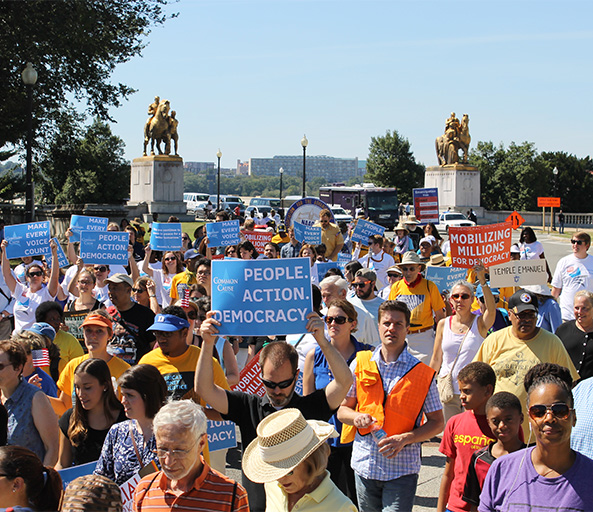
Our response to this blatant attempt to intimidate voters? Mobilizing across the country to show We The People should decide our country’s future, not wannabe dictators.
Will you chip in to support our work to stop Trump’s hostile takeover?