
Voting Tool
Prop 50 Special Election: Voter Information Center

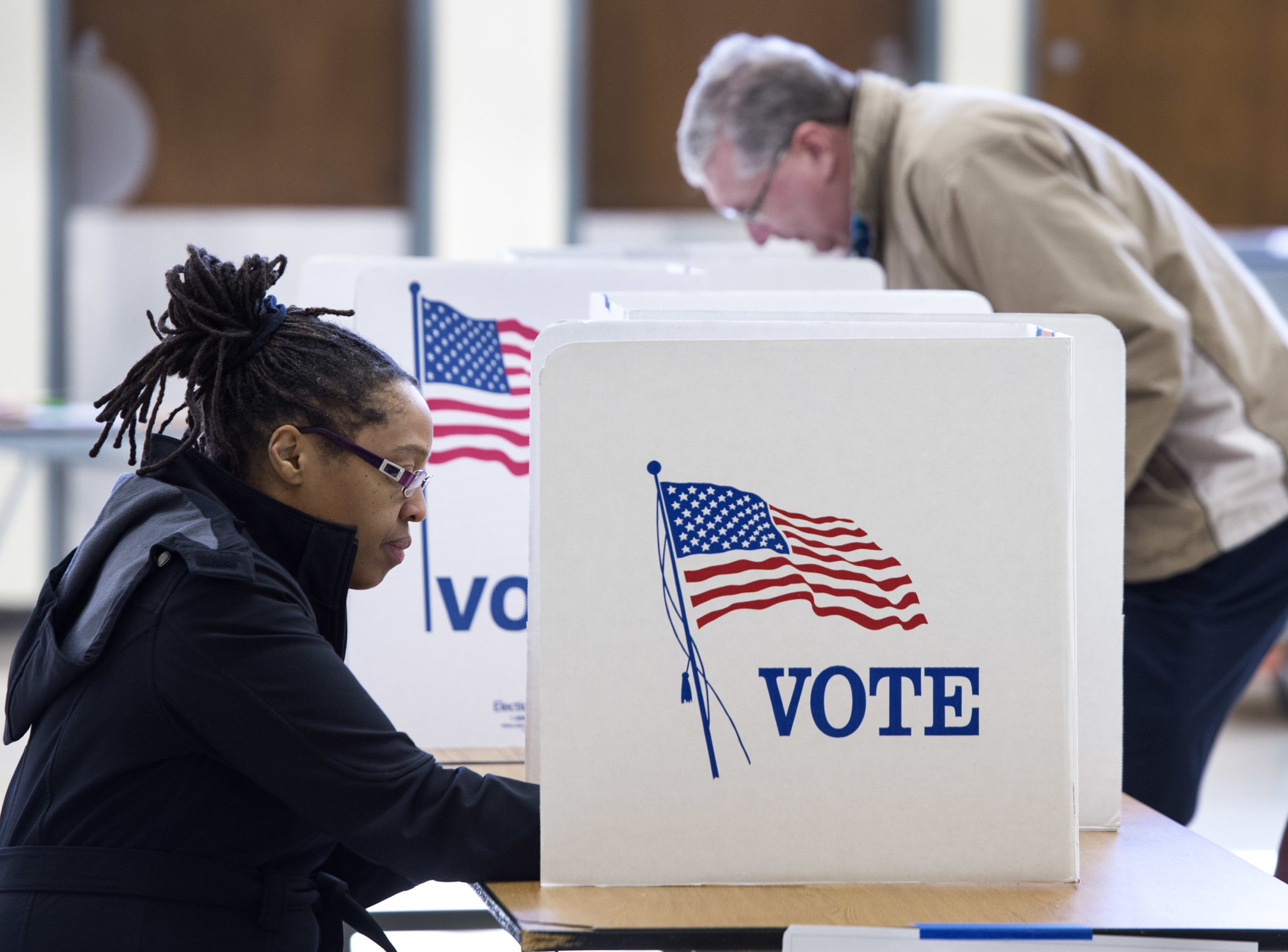
California will have a statewide special election on November 4, 2025.
Across the state, voters will be asked to decide on Proposition 50, a measure that would redraw California’s congressional districts ahead of the 2026 midterm elections. Common Cause believes that our democracy works best when all voices are heard—whether in regular or special elections and in all local, state, and federal elections.
Use this hub to learn how you can participate in the November 4 election, how Prop 50 could affect your community, and how you can join the movement for people-powered redistricting reform. Make your voice heard!
Voting: What Are My Rights?
As with all statewide elections, Californians have several options for registering to vote and casting a ballot for the November 4 special election. Learn more about your rights below.
California’s Nov. 4th Special Election: Voting 101
In this webinar, nonpartisan democracy experts from Common Cause, League of Women Voters of California, and Asian Law Caucus explain what’s on the ballot this November and how you can make your voice heard in this election.
Who can vote in California?
To vote in statewide elections in California, you must be:
- A U.S. citizen,
- A resident of California,
- At least 18 years old on Election Day, and
- Not currently serving a prison sentence or found mentally incompetent to vote by a court.
Although you must be 18 or older on Election Day to vote, 16 and 17 year olds in California can pre-register to vote. Learn more here.
Most Californians with a criminal record have the right to vote, including people who have finished their sentence or are awaiting trial, those who are serving a misdemeanor or felony jail sentence, and those who are on a form of community supervision such as probation or parole. The only time a conviction affects your right to vote is while you are serving a state or federal prison sentence.
Californians who are unhoused and meet the eligibility criteria above also have the right to vote. If you are unhoused, you may register to vote at a location where you spend most of your time, such as a shelter, park, or cross streets. You can also provide a mailing address, if available, to receive a mailed ballot and other election materials.
How do I register to vote?
Voter registration is required before an eligible Californian can vote. It is important to make sure that your registration is up-to-date so that you can receive the correct ballot in time for the election. If you have moved, changed your name, or regained your voting rights since you last voted, you will need to update your registration. You can also update your registration to change your party or language preferences.
For the November 4 special election, you can register or update your voter registration online, by mail, or at your local election office, DMV, public assistance office, post office, or public library until October 20, 2025.
If you miss the October 20 deadline, you can use same-day registration to register or update your information in-person at your vote center or polling place until the close of polls on Election Day.
How can I cast my ballot?
There are multiple ways that you can vote in California.
Mail: All voters with active registrations will automatically be mailed a ballot. Once you complete this ballot, you can return it through USPS in the ballot envelope provided. No postage is required.
Drop box: You may also return a completed ballot using any official ballot drop box across the state. In many counties, this may be the fastest way to return the ballot you received by mail. Find drop-box and early voting locations here.
In person: If you prefer or need to vote in-person, voting locations will be open in every county on November 4 from 7am to 8pm. Early in-person voting options will also be available starting October 6. Your nearest voting location will be listed on the sample ballot you receive by mail. You can also find your voting location here or on your county elections website.
Remember to sign your ballot envelope before returning it by mail or drop box. Elections officials will compare this signature to the one on your registration before counting your ballot and will contact you if your signature is missing or does not compare. Your ballot must be postmarked or returned to a drop box by 8pm on November 4 to be counted. Sign up for Where’s My Ballot to get updates when your ballot is mailed to you, received, and counted.
Know your rights at the polls:
- If you are in line to vote when polls close, you have the right to vote. Stay in line!
- You do not have to show ID to vote in a state election in California.
If you experience challenges at the polls–including issues with registering or casting your ballot, long lines, or intimidation–call or text 866-OUR-VOTE to speak with a trained election protection volunteer.
What if I need help voting?
Voting materials and in-person voting assistance are available in multiple languages. Add your language preference when registering to vote or contact your county elections office to ask if voting materials are available in your preferred language.
Assistance is also available for voters with disabilities, including accessible ballot-marking devices and curbside voting at polling places and vote centers statewide. You can also contact your county elections office to learn more about Remote Accessible Vote-By-Mail and Emergency Ballot Delivery options.
Any voter is permitted to bring up to two people–other than their employer or union representative–into the voting booth to assist them. Californians are also entitled to take up to two hours off of work to vote if they do not have enough time outside of normal working hours.
Finally, you may have someone else return your completed ballot for you to any drop box or voting location, as long as they are not being paid based on the number of ballots they return. Just complete the authorization section on your ballot envelope.
Find the California Voter Bill of Rights here to learn more about your right to vote.
Prop 50: What Is It?
Proposition 50 will be the only statewide measure on the November 4 ballot. Some local measures may also be on the ballot in your city or county—find out here what will be on your ballot.
Prop 50 would adopt a new congressional map for California to be used in the 2026-2030 elections. If voters approve Prop 50 on November 4, the map specified in AB 604 would take effect for California’s U.S. House districts starting in 2026. After the 2030 Census, redistricting authority returns to the Citizens Redistricting Commission under existing law.
What it would (and wouldn’t) change:
- Applies only to U.S. House districts (not State Assembly or State Senate).
- Is time-limited: the Prop 50 map would end after the 2030 Census.
- Does not change the Citizens Redistricting Commission’s role after 2030.
You can review the proposed map here.
Where did Prop 50 come from?
In July of this year, President Trump’s Department of Justice sent a letter to Texas political leaders demanding that the state dismantle congressional voting districts that were designed to empower communities of color to have the opportunity to elect candidates of their choice. Trump also sought to flip five of the state’s congressional districts from Democratic to Republican control. California Governor Gavin Newsom announced a plan to respond to Texas’s attack on voting rights by redrawing the state’s congressional district lines to flip five Republican districts to Democratic control before the 2026 midterm elections.
In August, the California Legislature passed a legislative package that called for a November 4, 2025, special election in which voters will be asked whether to adopt the new state congressional map that aims to achieve this goal. Learn more about the story behind Prop 50 here.
What is redistricting?
Every ten years, after the Census, the Constitution requires states to redraw state legislative and U.S. House districts so that each district has roughly the same number of people.
Under current state law, after each Census, California’s voting district boundaries are redrawn by a Citizens Redistricting Commission—a 14-member commission made up of Democrats, Republicans, and independent voters who use nonpartisan criteria to draw the maps.
What would Prop 50 do?
If a majority of voters pass Prop 50 on November 4, new district boundaries would be adopted for California’s U.S. congressional representation. The new congressional map would be used to elect the state’s members of the U.S. House of Representatives from 2026 through 2030. After the 2030 Census, the responsibility of redrawing California’s congressional districts would return to the Citizen’s Redistricting Commission.
The proposed congressional map that would be adopted if Prop 50 passes is described in AB 604 and available for review here.
Where does Common Cause stand on Prop 50?
Common Cause California is not opposing Prop 50. We evaluated any mid-decade redistricting against our fairness criteria—focused on proportionality, public participation, racial equity, time limits, and support for federal and independent redistricting reforms—and determined that Prop 50 meets those standards. Read our full criteria here.
Election Protection: What Is Common Cause Doing?
Common Cause ensures that every voter can make their voices heard, even when anti-voter rules or actors try to get in the way. This November, we will mobilize trained Election Protection volunteers in certain counties to help our fellow Californians navigate the voting process and cast their votes without obstruction, confusion, or intimidation. These poll monitors will provide information, troubleshoot problems, and report bad practices to our teams to resolve them with election officials.
Together, we can make a real difference in helping voters exercise their rights and protecting the democratic process at a moment when so much is at stake. It costs just $50 to sponsor a volunteer, giving them the training, support, and resources they need to assist dozens of voters on Election Day.
Will you chip in $50 today to support our Election Protection Program and stand with us to ensure every Californian’s voice is heard this November?
Redistricting Reform: What Can I Do?
When redistricting is done right, communities have a real say, the process is transparent, and the result is fair representation—not a political advantage for those in power. But when politicians use gerrymandering to win elections without winning more voters, they short‑circuit accountability and distort policy.
Independent citizen redistricting commissions are the best way to achieve fair representation. Common Cause California has worked for decades to make our state’s redistricting processes more transparent and representative, including by helping to secure the creation of the Citizen’s Redistricting Commission. We are committed to supporting the nonpartisan, people-powered work of the Commission, as well as expanding the use of independent redistricting commissions for local governments across the state.
Sign up here to stay informed about Common Cause’s campaign to bring independent redistricting reform to local government throughout California.
Translated Voter Information Center Pages
2025 CA Voter Info Center_Traditional Chinese 2025 CA Voter Info Center_Korean 2025 CA Voter Info Center_Spanish